Victoria and Albert Museum: Tips, Exhibits & 2026 Guide
There’s a reason the Victoria and Albert Museum draws millions of visitors each year. It’s not just the sheer size or the free admission – it’s the quiet drama of a 16th-century bed that could sleep four couples, or the plaster casts of monuments you’d never see in one place otherwise.
World’s largest museum of decorative arts and design: Established 1852 ·
Total objects in collection: Over 2.3 million ·
Gallery length: 7 miles (11 km) ·
Annual visitors (2019): 3.9 million ·
Admission: Free (special exhibitions ticketed) ·
Location: Cromwell Road, South Kensington, London
Quick snapshot
- Free general admission, no booking needed (V&A South Kensington (official museum site))
- Nearest tube: South Kensington (District, Circle, Piccadilly lines) (V&A South Kensington (official museum site))
- Open daily 10:00–17:45, Friday until 22:00 (V&A South Kensington (official museum site))
- Exact wait times during peak seasons (varies) (V&A Visiting FAQs (customer service guidance))
- Photography allowed in most galleries, but some restrictions apply (V&A Visiting FAQs (customer service guidance))
- Future exhibition schedules beyond 2026 not yet announced (V&A What’s On (events page))
- Friday late opening until 22:00 (V&A South Kensington (official museum site))
- Gallery clearing begins around 17:15 on standard days (Lonely Planet (travel guide publisher))
- Closed 24, 25, 26 December (Visit London (official tourism board))
- Future exhibitions beyond 2026 not yet announced (V&A What’s On (events page))
- Members’ events and talks continue year-round (V&A What’s On (events page))
Six facts at a glance, one pattern: the V&A is both vast and free, but the trade-off is time.
| Label | Value |
|---|---|
| Founded | 1852 |
| Collection size | 2.3 million objects |
| Number of galleries | 145 |
| Recorded annual visitors (2019) | 3,932,938 |
| Admission cost | Free (excluding special exhibitions) |
| Address | Cromwell Road, London SW7 2RL |
What is the most famous thing in the Victoria and Albert Museum?
The V&A’s collection spans 5,000 years of art and design, but a few objects and galleries have become cultural icons in their own right.
The Great Bed of Ware
- A 16th-century four-poster bed, reputedly large enough to sleep four couples (Wikipedia (encyclopedic reference)).
- Mentioned in Shakespeare’s Twelfth Night (Wikipedia (encyclopedic reference)).
- Made of oak with intricate carving and marquetry (V&A (museum collection notes)).
The Great Bed of Ware is the V&A’s most famous single object, but it’s far from the only standout. The real story is the museum’s ability to make a 400-year-old piece of furniture feel like a modern spectacle.
The Raphael Cartoons
- Seven large-scale designs for tapestries, created by Raphael in 1515–1516 (V&A (museum collection notes)).
- Considered masterpieces of the Italian Renaissance (V&A (museum collection notes)).
The Cast Courts
- Plaster casts of major monuments, including Trajan’s Column (cut into sections) and the portal of the Cathedral of Santiago de Compostela (V&A (museum collection notes)).
- One of the most photographed spaces in the museum (Time Out London (city guide)).
The Fashion Gallery
- Spans 500 years of clothing, from 17th-century gowns to contemporary designers (V&A (museum collection page)).
- Includes pieces by Alexander McQueen, Vivienne Westwood, and Yves Saint Laurent (V&A (museum collection page)).
The pattern: the V&A’s most famous attractions are a mix of the ancient and the contemporary. The Raphael Cartoons and the Cast Courts draw art historians; the Fashion Gallery attracts a younger, trend-conscious crowd. The Great Bed of Ware, with its Shakespearean cameo, is the universal conversation starter.
Is it worth going to Victoria and Albert Museum?
For visitors weighing time and money, the V&A presents a compelling case – but it’s not without its drawbacks.
Free admission value
- General admission is free and does not require booking (V&A South Kensington (official museum site)).
- This makes it an accessible option for budget-conscious travellers (Visit London (official tourism board)).
Collection diversity
- World’s largest collection of decorative arts and design: textiles, ceramics, glass, jewellery, furniture, photography, and more (Wikipedia (encyclopedic reference)).
- Something for every interest, from medieval ivories to contemporary digital art (V&A (museum collections page)).
Architectural beauty
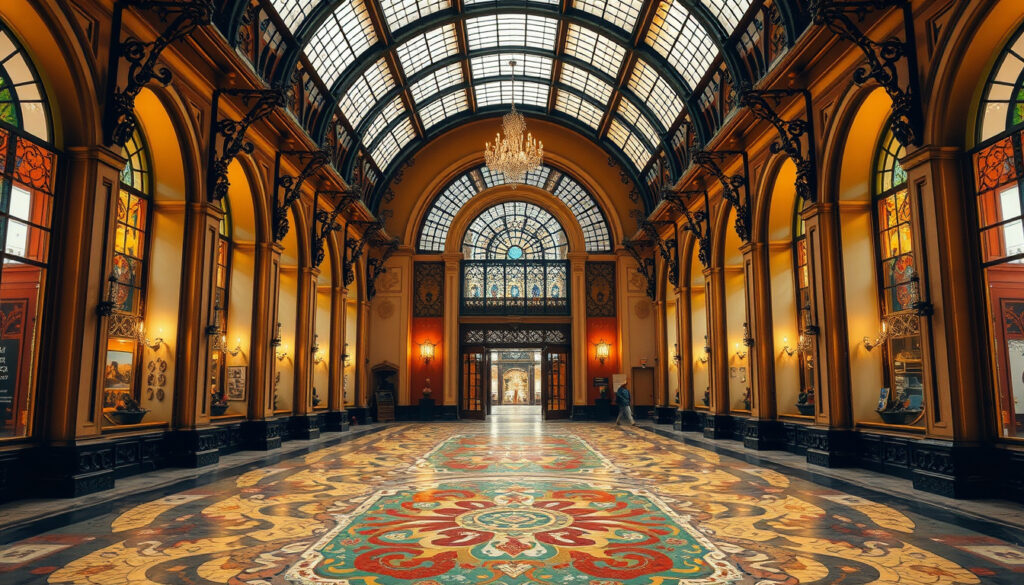
- The building itself is a historic landmark, designed by Aston Webb and completed in 1909 (V&A (museum architecture notes)).
- The Grand Entrance, the dome, and the ornate staircases are attractions in their own right.
Special exhibitions
- Ticketed exhibitions (e.g., “Dior: Designer of Dreams”, “Mary Quant”) attract global audiences and are often sold out (V&A What’s On (events page)).
- Members get free and unlimited entry to all exhibitions (V&A Visiting FAQs (customer service guidance)).
Free admission means you can wander without financial pressure, but the museum’s size can be overwhelming. The average visitor spends 2–4 hours inside, and many leave feeling they’ve only scratched the surface (Artsy Traveler (travel blog)).
Can you just walk into Victoria and Albert Museum?
Yes, for the permanent galleries. The policy is straightforward, but a few details matter for a smooth visit.
Free entry without booking for general admission
- No booking required for the permanent collection (V&A Visiting FAQs (customer service guidance)).
- Walk-in at any time during opening hours (V&A South Kensington (official museum site)).
Timed tickets for special exhibitions
- Ticketed exhibitions require advance purchase online (V&A Visiting FAQs (customer service guidance)).
- Members do not need to book a time slot (V&A Visiting FAQs (customer service guidance)).
Capacity limits during peak times
- During busy periods (e.g., school holidays, special exhibition openings) entry may be staggered (V&A Visiting FAQs (customer service guidance)).
- Visitors may be asked to queue for the busiest exhibitions (V&A Visiting FAQs (customer service guidance)).
The implication: you can show up without a plan for the free galleries, but if you want to see a blockbuster show, book ahead. The V&A advises checking the website before your visit.
How long does it take to walk through the Victoria and Albert Museum?
Time is the V&A’s biggest hidden cost. Here’s what different approaches look like.
Minimum suggested time: 2–3 hours
- Allows you to see the highlights: the Great Bed of Ware, Raphael Cartoons, Cast Courts, and a few other galleries (Lonely Planet (travel guide publisher)).
- Free guided tours (45–60 minutes) help you cover the essentials quickly (V&A South Kensington (official museum site)).
Full day for dedicated visitors
- Most visitors spend 2–4 hours, but a thorough exploration takes 3–4 hours or more (Artsy Traveler (travel blog)).
- The museum covers 7 miles of galleries – you can’t see it all in one visit (V&A South Kensington (official museum site)).
Highlights tour: 1 hour
- The V&A offers free introductory tours daily (V&A South Kensington (official museum site)).
- London Walks recommends allowing at least two hours for a highlights tour (London Walks (tour operator)).
Galleries grouped by theme
- Galleries are organised by material and period: Ceramics, Glass, Textiles, Furniture, Fashion, Photography, etc. (V&A (museum collections page)).
- This makes it easy to target specific areas of interest.
For a London visitor with limited time, the V&A’s size is a double-edged sword. The smartest move: pick two or three galleries that match your interests and skip the rest. Save the full sweep for a return trip.
Which tube station is for Victoria and Albert Museum?
Getting there is simple, but knowing the right station saves time on the day.
South Kensington (District, Circle, Piccadilly)
- Nearest and most convenient station (V&A South Kensington (official museum site)).
- A pedestrian subway connects the station to the museum (follow signs for “Museums”) (V&A South Kensington (official museum site)).
Knightsbridge (Piccadilly)
- About 10–15 minutes’ walk through Hyde Park or along Brompton Road (V&A South Kensington (official museum site)).
Gloucester Road (District, Circle, Piccadilly)
- Also a 10–15 minute walk, less crowded than South Kensington.
Bus routes
- Routes 14, 49, 70, 74, 345, C1 stop nearby (Transport for London (official transport authority)).
- Alight at “Victoria and Albert Museum” or “South Kensington Museums”.
The pattern: South Kensington is the undisputed champion, but if you’re coming from Knightsbridge or Gloucester Road, the walk is pleasant and goes through some of London’s most elegant streets.
What is the famous bed in the Victoria and Albert Museum?
The Great Bed of Ware is the V&A’s most talked-about piece of furniture. Here’s what makes it so special.
The Great Bed of Ware
- A 16th-century four-poster bed, made from oak with intricate carving and marquetry (V&A (museum collection notes)).
- Reputedly large enough to sleep four couples (about 3.4 metres wide) (Wikipedia (encyclopedic reference)).
History and size
- Originally made for the White Hart Inn in Ware, Hertfordshire, around 1590 (V&A (museum collection notes)).
- It became a tourist attraction in its own right, with visitors carving their names into the wood (V&A (museum collection notes)).
Shakespearean references
- Mentioned in Shakespeare’s Twelfth Night (1601): “The bed of Ware” is referenced as a humorous exaggeration (Wikipedia (encyclopedic reference)).
Materials and craftsmanship
- Made of oak, with marquetry panels depicting mythical scenes and geometric patterns (V&A (museum collection notes)).
- Restored by the V&A in the 20th century to preserve its original form.
Upsides
- Free general admission – no ticket needed for permanent collection (V&A Visiting FAQs (customer service guidance))
- World-class collection spanning 5,000 years (Wikipedia (encyclopedic reference))
- Beautiful building and historic architecture (V&A (museum architecture notes))
- Free guided tours offered daily (V&A South Kensington (official museum site))
- Excellent special exhibitions (though ticketed) (V&A What’s On (events page))
- Convenient location in South Kensington museums district (V&A South Kensington (official museum site))
Downsides
- Can be very crowded on weekends and school holidays (V&A Visiting FAQs (customer service guidance))
- Size may be overwhelming – 7 miles of galleries (V&A South Kensington (official museum site))
- Special exhibitions cost extra and can sell out (V&A Visiting FAQs (customer service guidance))
- Photography restrictions in some galleries (V&A Visiting FAQs (customer service guidance))
- Cloakroom charges for bags (small fee) (V&A Visiting FAQs (customer service guidance))
What’s clear and what’s not
Here’s a summary of the facts we’re confident about and the areas where you should stay flexible.
Confirmed facts
- The V&A is free to enter for general admission (V&A South Kensington (official museum site))
- South Kensington is the nearest tube station (V&A South Kensington (official museum site))
- The Great Bed of Ware is a famous artifact (Wikipedia (encyclopedic reference))
- Special exhibitions require ticketed entry (V&A Visiting FAQs (customer service guidance))
- Opening hours: 10:00–17:45 daily, Friday until 22:00 (V&A South Kensington (official museum site))
What’s unclear
- Exact wait times during peak seasons (varies)
- Whether photography is allowed in all galleries (some restrictions)
- Future exhibition schedules beyond 2026 (not yet announced)
- Whether the cloakroom will be open (check on the day)
“We champion design and creativity in all its forms.”
– V&A official website (V&A (museum mission statement))
“The world’s largest museum of applied arts, decorative arts and design.”
– Wikipedia (Wikipedia (encyclopedic reference))
“Allow at least two hours for a highlights tour.”
– London Walks tour guide (London Walks (tour operator))
For anyone planning a London trip, the V&A offers an unmatched cultural bargain: free access to one of the world’s great collections. But the trade-off is time – you’ll need at least half a day to do it justice. The smart move: arrive early, head straight for the Cast Courts, and save the Great Bed of Ware for last. For the budget-conscious traveller, the choice is clear: skip the paid exhibitions, grab a free map, and let the building guide you.
what2book.com, whichmuseum.com, storyhunt.io, tripadvisor.com, vam.ac.uk, facebook.com, vam.ac.uk
Frequently asked questions
What are the opening hours of the Victoria and Albert Museum?
Open daily 10:00–17:45, with Friday late opening until 22:00. Closed 24, 25, and 26 December. (V&A South Kensington (official museum site))
Is photography allowed inside the Victoria and Albert Museum?
Photography is allowed in most galleries for personal use, but flash, tripods, and selfie sticks are not permitted. Some special exhibitions may prohibit photography. (V&A Visiting FAQs (customer service guidance))
Are there guided tours available at the V&A?
Yes, the V&A offers free introductory tours daily (45–60 minutes). There are also paid specialist tours and audio guides available. (V&A South Kensington (official museum site))
How do I get to the V&A by tube from central London?
Take the District, Circle, or Piccadilly line to South Kensington. A pedestrian subway connects the station to the museum. Alternatively, Knightsbridge or Gloucester Road stations are a 10–15 minute walk. (V&A South Kensington (official museum site))
Is there a cloakroom at the Victoria and Albert Museum?
Yes, a cloakroom is available for a small fee (cash only). Large bags, suitcases, and backpacks must be left in the cloakroom. (V&A Visiting FAQs (customer service guidance))
Can I bring food and drink into the museum?
Food and drink are not allowed in the galleries. There are several cafés and a restaurant on site, as well as picnic areas in the garden. (V&A Visiting FAQs (customer service guidance))
Are there baby-changing facilities at the V&A?
Yes, baby-changing facilities are available in the toilets on the ground floor and in the lower ground floor. There are also family-friendly activities and a garden play area. (V&A Visiting FAQs (customer service guidance))
What is the address of the Victoria and Albert Museum?
Cromwell Road, London SW7 2RL. (V&A South Kensington (official museum site))
More related posts
 M&S Bra Fitting Guide: Appointments, Sizes & Ireland Stores
 11 Best Things to Do in Santorini (2026 Itinerary Guide)
 Athletic Club vs Arsenal 2025: Result, Stats, Highlights
 Road Traffic Accident Cork Today: Live Updates & Map
 Time in Los Angeles Now: Current Time, AM/PM, and UTC Offset
 Man Utd vs Burnley: TV Channel, Kick-Off, Score, Highlights & Stats
 Real Betis vs Real Madrid Stats: Head-to-Head and Mbappé Injury
 South Africa Rugby Team – Springboks Guide