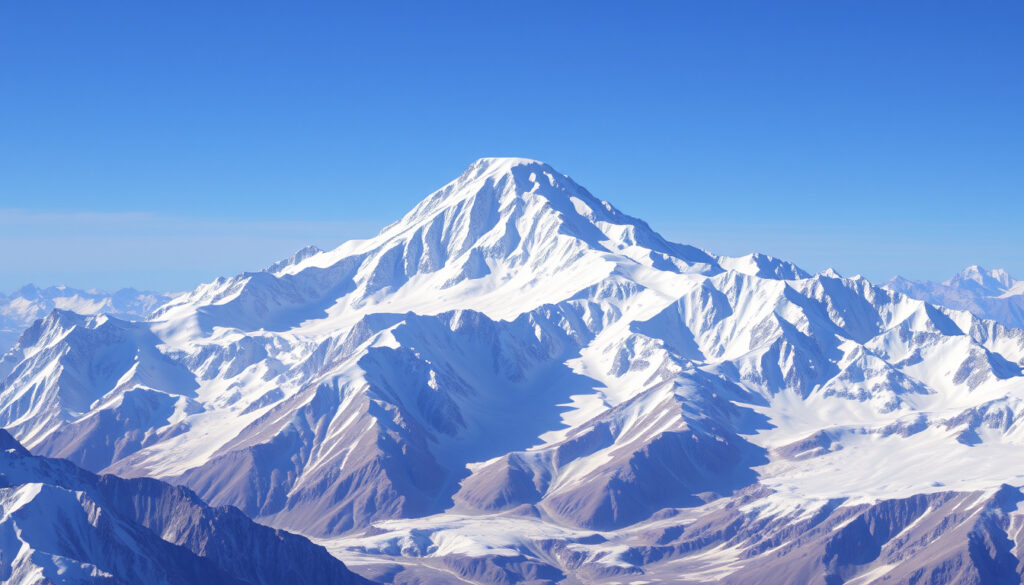
Highest Mountain in Europe: Mount Elbrus at 5,642m Facts
Ask a room of mountaineers about Europe’s highest peak, and you might walk away more confused than when you arrived. That’s because Mount Elbrus and Mont Blanc have been locked in a geographical tug-of-war for over a century—one peaks above the other by a staggering 835 meters, yet which one “counts” depends entirely on where you draw the line between continents. Most modern authorities have settled the debate, but the nuance still surprises plenty of people. Here’s what the latest consensus says, what measurements actually show, and why the answer matters more than you might think.
Highest Peak: Mount Elbrus · Elevation: 5,642 m (18,510 ft) · Location: Caucasus Mountains, Russia · Second Highest (Alps): Mont Blanc at 4,807 m
Quick snapshot
- Mount Elbrus stands at 5,642 m, confirmed by multiple surveys (Wikipedia Seven Summits encyclopedia)
- Mont Blanc measures 4,807.3 m as of 2025, per recent measurements (Wikipedia Mont Blanc reference)
- Nine of Europe’s ten highest peaks cluster in the Caucasus (Kandoo Adventures outdoor guide)
- Exact continental boundary definition varies by country and institution
- Whether the Kuma-Manych Depression or Greater Caucasus watershed defines Europe-Asia border remains disputed in some contexts
- Degree of Elbrus’s permanent inclusion per Eastern European and Central Asian cartographic traditions
- Plate tectonic positioning of the Caucasus relative to continental definitions
- Whether Douglas Freshfield’s 1868 claim constitutes a valid first ascent alternative to 1874
- Comparative fatality rates and safety records between Elbrus and Mont Blanc ascents
- 1786: Mont Blanc first ascent
- 1874: Elbrus confirmed first ascent by British expedition
- 2002–2025: Mont Blanc GPS measurements show fluctuating ice dome height
- Elbrus remains the Seven Summits target for climbers pursuing Bass or Messner lists
- Mont Blanc retains status as highest peak in Western Europe and the European Union
| Attribute | Value |
|---|---|
| Highest Mountain | Mount Elbrus |
| Elevation | 5,642 meters (18,510 feet) |
| Range | Caucasus Mountains |
| Country | Russia |
| Type | Dormant stratovolcano |
| Prominence | 4,741 m |
| Glaciers | 22 |
What’s the highest mountain in Europe?
Mount Elbrus holds the title of highest mountain in Europe, with its western summit reaching 5,642 meters above sea level. The Britannica notes that Elbrus is a dormant stratovolcano formed over 2.5 million years ago, home to 22 glaciers that feed the Kuban River below.
Mount Elbrus overview
The mountain features two volcanic peaks—the western summit at 5,642 m and the eastern at 5,621 m, a 21-meter difference that matters for precision-focused climbers. Elbrus sits within the Caucasus Mountains in southern Russia, roughly 150 kilometers from the Georgian border. Unlike many famous peaks, Elbrus offers a mechanical advantage: cable cars and snowcats can ferry climbers to higher base camps, reducing the physical demands of reaching altitude.
Elbrus appears on both the Bass and Messner Seven Summits lists—the two most widely referenced mountaineering achievements—cementing its status as Europe’s representative peak among serious climbing circles.
Elevation and location details
The Caucasus Mountains form the physical boundary between European Russia and Asian Georgia, and modern authorities now agree that Elbrus falls on the European side of this watershed divide. According to the Active-Traveller publication, this consensus has largely settled the historical debate that once placed Elbrus in Asia.
The mountain’s prominence of 4,741 m is exceptional—meaning it rises that distance from the lowest contour line surrounding it. For context, Mont Blanc’s prominence sits at 4,696 m. Both peaks rank among the world’s most prominent mountains.
Is it Elbrus or Mont Blanc?
This question fuels more online debate than almost any other geographical classification. The short answer: Mount Elbrus wins by elevation, standing a full 835 meters taller than Mont Blanc. But “Europe” itself is geographically contested, and that boundary question drives the entire debate.
Three different Seven Summits lists use different peaks for Europe—Elbrus on the Bass and Messner lists, Mont Blanc on the Hackett list. No single authority has declared one list correct over another.
Geographical boundary debate
The continental boundary through the Caucasus has two main interpretations. The Greater Caucasus watershed—the crest line of the mountains—places Elbrus firmly in Europe. An alternative approach, the Kuma-Manych Depression (a lowland corridor further north), would technically place the entire Caucasus range, including Elbrus, in Asia.
Most Russian, Georgian, and international geographical authorities use the watershed definition. Wikipedia’s Seven Summits article states that modern authorities now agree Elbrus falls within the European side of the border. This is the interpretation supported by major encyclopedic and cartographic sources.
Height comparison
These measurements show how Elbrus dominates in absolute height while Mont Blanc’s ice summit fluctuates with seasonal changes.
| Peak | Elevation | Range | First Ascent |
|---|---|---|---|
| Mount Elbrus (West Summit) | 5,642 m (18,510 ft) | Caucasus, Russia | 1874 |
| Mont Blanc | 4,807.3 m (15,754 ft) | Alps, France/Italy | 1786 |
| Height difference | 834.7 m (2,738 ft) | Elbrus taller by roughly 17% | |
Mont Blanc’s elevation isn’t static—it fluctuates with ice accumulation and melt. GPS measurements recorded 4,808.75 m in 2005, dropped to 4,805.59 m during the 2023 drought, and returned to 4,807.3 m in 2025. Elbrus’s volcanic summit shows no such variation; its height remains fixed by bedrock.
What is the highest mountain entirely in Europe?
The phrasing “entirely in Europe” hints at the boundary debate’s practical consequence. If you accept the Greater Caucasus watershed as Europe’s southern edge, then Elbrus sits squarely in Europe. If you use the stricter Kuma-Manych definition, Elbrus would technically be in Asia, making Mont Blanc Europe’s highest peak.
Western Europe vs full continent
Geographers typically distinguish between “Europe” as a cultural-political concept and “Western Europe” as a regional grouping. Mont Blanc is universally recognized as the highest peak in Western Europe and the European Union, per the Active-Traveller publication.
The Caucasus debate matters more for continental-scale lists (like Seven Summits) than for regional or national contexts. Within France and Italy, Mont Blanc’s status goes unchallenged. Across Europe as a geopolitical entity spanning from Portugal to Russia’s Pacific coast, Elbrus claims the crown.
Alternative peaks
For those who dispute Elbrus’s continental placement, Dykh-Tau (5,205 m) ranks second-highest in the Caucasus and would become Europe’s highest if Elbrus were excluded. Shkhara (5,201 m) follows closely. Mont Blanc, despite being tenth on the overall list, remains the uncontested leader within the Alps.
What are the 4 major mountains in Europe?
Europe’s highest peaks concentrate in the Caucasus, with the top four all clustering in that range. Kandoo Adventures notes that nine of Europe’s top ten peaks sit in the Caucasus, pushing Mont Blanc to tenth place overall.
Top peaks list
This ranking demonstrates how the Caucasus dominates European elevation despite receiving less global recognition than the Alps.
| Rank | Mountain | Elevation | Range | Country |
|---|---|---|---|---|
| 1 | Mount Elbrus | 5,642 m | Caucasus | Russia |
| 2 | Dykh-Tau | 5,205 m | Caucasus | Russia |
| 3 | Shkhara | 5,201 m | Caucasus | Georgia/Russia |
| 4 | Mont Blanc | 4,807 m | Alps | France/Italy |
This list underscores how the Alps—Europe’s most famous mountain range—harbor only one peak in the top four. The Caucasus, often overlooked by casual observers, dominates the continent’s elevation rankings.
Major ranges overview
The Alps stretch roughly 1,200 km across France, Italy, Switzerland, Austria, Slovenia, Germany, and Liechtenstein. The Caucasus extends 1,100 km between the Black Sea and Caspian Sea. The Pyrenees, Carpathians, Apennines, and Scandinavian mountains complete Europe’s major alpine systems, though none approach Elbrus or Mont Blanc in height.
Can a beginner climb Mount Elbrus?
Mount Elbrus presents a nuanced challenge for newer climbers. The mountain’s infrastructure—cable cars reaching 3,800 m and snowcats adding another 1,000 m of altitude gain—means summiting without technical climbing skills is possible. Experienced climbers consider Elbrus a moderate objective; beginners face significant risks at altitude.
Altitude sickness affects climbers above 4,000 m regardless of fitness level. Elbrus claims several lives annually—most fatalities occur from falls, hypothermia, or acute altitude sickness. Acclimatization protocols exist but cannot eliminate the risk.
Climbing requirements
Guided expeditions typically require no technical mountaineering experience, but participants should possess strong cardiovascular fitness and tolerance for cold, wind, and sustained physical exertion. The south route—the most popular ascent path—was first conquered in 1874 by a British expedition led by F. Crauford Grove, according to Much Better Adventures.
The ascent involves glacier travel, crampon use, and ice axe technique. Climbers walk on snow and ice for hours at -15°C or colder. Most operators require participants to have prior high-altitude experience or commit to a multi-day itinerary allowing proper acclimatization.
Difficulty comparison to Kilimanjaro
Life Happens Outdoors notes that Elbrus offers a mechanical advantage Kilimanjaro lacks: the snowcat access lets climbers skip the physical grind of the first 4,800 vertical meters. Kilimanjaro, by contrast, demands walking every step to the summit at 5,895 m.
In practice, Elbrus and Kilimanjaro present comparable difficulty for first-time high-altitude climbers. Both require fitness, acclimatization, and weather luck. Elbrus’s colder, windier conditions offset Kilimanjaro’s greater elevation. Guided climbs on both peaks are readily available through numerous operators.
Elbrus’s 1874 first ascent came 88 years after Mont Blanc’s 1786 conquest—not because Elbrus is harder, but because its remote Caucasus location kept it off the mountaineering radar until the 19th century.
Confirmed facts
- Elbrus elevation: 5,642 m (verified by Wikipedia Seven Summits encyclopedia)
- Mont Blanc elevation: 4,807.3 m as of 2025 (Wikipedia Mont Blanc reference)
- First ascent Elbrus: 1874 by British expedition
- First ascent Mont Blanc: 1786
- Elbrus is a dormant stratovolcano with 22 glaciers (Britannica authoritative reference)
- Modern authorities place Elbrus in Europe per Greater Caucasus watershed
What’s unclear
- Whether the Kuma-Manych Depression or Greater Caucasus watershed defines continental borders in official geographical standards
- Exact degree of Elbrus’s permanent inclusion in Europe per Eastern European and Central Asian cartographic traditions
- Plate tectonic positioning of the Caucasus relative to continental definitions
- Whether Douglas Freshfield’s 1868 claim constitutes a valid first ascent alternative to 1874
- Comparative fatality rates and safety records between Elbrus and Mont Blanc ascents
- Degree of acceptance for alternative boundary definitions in academic cartography
The generally accepted highest summit in Europe is Mount Elbrus (5,642 m or 18,510 ft) in the Caucasus.
— Wikipedia Seven Summits encyclopedia
Modern day authorities now agree that Elbrus falls within the European side of the border.
Mont Blanc is the highest peak in Western Europe, not the continent of Europe.
The elevation gap between these two peaks—835 meters—represents more than a numerical difference. It reflects a fundamental question about what “Europe” means geographically. For climbers chasing the Seven Summits badge, the answer determines their summit target. For geographers, it shapes how continental boundaries get drawn across the planet’s landmasses.
Related reading: Train Routes in Europe
erikweihenmayer.com, lifehappensoutdoors.com, adventurealternative.com, thebestviewpoints.com
While Elbrus dominates Caucasus height debates over Mont Blanc, avid climbers often embrace the Tour du Mont Blanc trek encircling Western Europe’s iconic Alpine peak across three nations.
Frequently asked questions
Is Mount Elbrus in Europe?
Yes, Mount Elbrus is generally accepted as being in Europe. Most geographical authorities place it on the European side of the Greater Caucasus watershed, which serves as the conventional Europe-Asia boundary through the region.
How tall is Mont Blanc?
Mont Blanc stands at 4,807.3 meters as of 2025, according to recent GPS measurements. Its elevation fluctuates slightly each year due to ice accumulation and melt, ranging from 4,805.59 m (2023 drought low) to 4,808.75 m (2005).
What is the highest mountain in the Alps?
Mont Blanc is the highest mountain in the Alps at 4,807.3 m. It sits on the France-Italy border and has been measured multiple times since 2002 using GPS technology.
Why is there debate over Europe’s highest peak?
The debate centers on how to define Europe’s southern boundary. If the Greater Caucasus watershed is used (most common), Elbrus is highest. If the Kuma-Manych Depression is used, Elbrus could be classified in Asia, making Mont Blanc Europe’s highest.
What are Europe’s ultra-prominent peaks?
Ultra-prominent peaks have topographic prominence exceeding 1,500 m. Europe’s ultras include Elbrus (4,741 m prominence), Mont Blanc (4,696 m), and others in the Caucasus and Alps. Prominence measures how much a peak rises above the lowest contour line encircling it.
Is Mount Elbrus climbable year-round?
Elbrus is technically climbable year-round, but summer months (June-September) offer the best conditions. Winter ascents face extreme cold, heavy snowfall, and avalanche risk. Most guided expeditions operate during the summer window.
What makes the Caucasus Mountains significant?
The Caucasus Mountains form the boundary between Europe and Asia in most geographical definitions. They contain nine of Europe’s ten highest peaks, including Elbrus, Dykh-Tau, and Shkhara, making the range the continent’s alpine center despite receiving less global attention than the Alps.
More related posts
 Ferry from Ireland to France: Routes & Prices 2025
 Chris Eubank Net Worth 2025: Peak to Bankruptcy
 EU Entry Exit System: Rules, Dates & Irish Exemption
 Rent a Room Relief Ireland: €14,000 Tax-Free, RTB Rules 2026
 Best Nintendo Switch 2 Cases: Tested & Reviewed (2025 Guide)
 Arnold Palmer Invitational Prize Money 2026: Payouts & Bhatia $4M Win
 Houses for Sale in Ballyheigue: Current Listings & Prices
 Real Betis vs Real Madrid Stats: Head-to-Head and Mbappé Injury