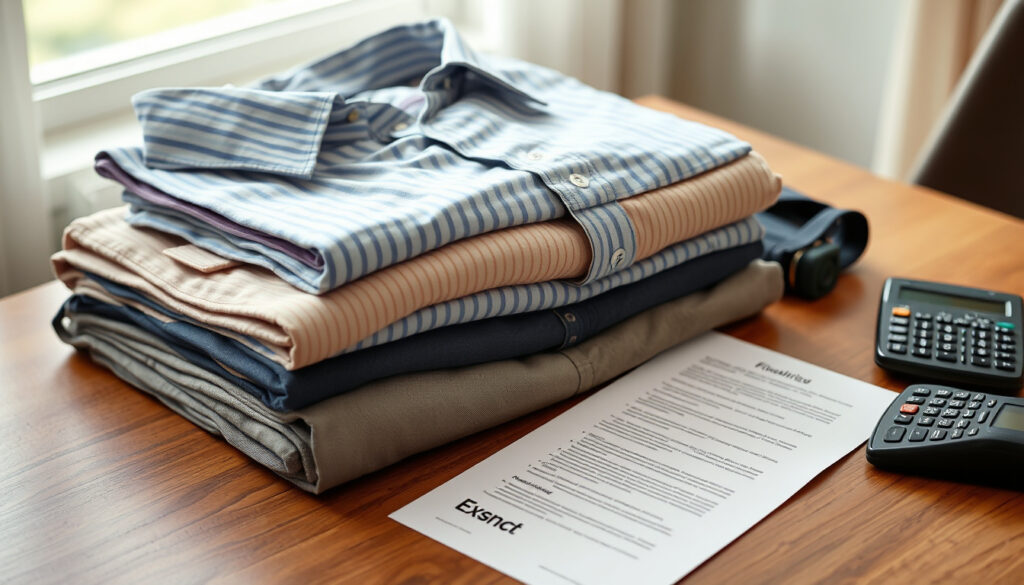
Disability Clothing Allowance Ireland: What You Can Claim in 2026
If you’re on Disability Allowance in Ireland, you might wonder whether there’s a specific clothing grant for adults. The short answer is no — but that doesn’t mean you can’t get help with clothing costs; this guide explains exactly what financial support exists, how to access it, and what other entitlements you may be missing.
Disability Allowance (Weekly Rate): €232 ·
Back to School Clothing Allowance (Max): €285 ·
Additional Needs Payment (Max per claim): €500 ·
Living Alone Increase (Weekly): €22
Quick snapshot
- Disability Allowance increases to €244 from January 2026 (Gov.ie – press release)
- Back to School Clothing and Footwear Allowance rates for 2026 are €160 (ages 4–11) and €285 (ages 12–22) (One Family – family support charity)
- Additional Needs Payment of up to €500 can cover essential clothing (Gov.ie – press release)
- Whether a standalone disability clothing allowance for adults will ever be introduced in Ireland
- Whether the €200 lump sum payment for disability recipients will be continued beyond 2026
- Whether the Additional Needs Payment maximum limit of €500 will increase in future budgets
- Budget 2026 (October 2025) announced increases; new rates take effect January 2026 (RTÉ – national broadcaster)
- Apply for Additional Needs Payment if you need clothing due to disability — no separate grant exists
The table below summarises the key answers.
| Fact | Answer |
|---|---|
| Is there a specific disability clothing allowance in Ireland? | No |
| Who can get Back to School Clothing and Footwear Allowance? | Families with children aged 4–18 |
| Can adults with disability get clothing support? | Yes, via Additional Needs Payment |
| What is the maximum Additional Needs Payment? | €500 per claim |
How Much Is a Clothing Grant in Ireland?
There is no single “clothing grant” that covers everyone. Instead, Ireland has two routes: a school-age programme for children, and a discretionary payment for adults who face hardship due to disability.
Back to School Clothing and Footwear Allowance
- The BSCFA is a once-off payment to help families with the cost of school uniforms and footwear.
- For 2026, the rate is €160 for children aged 2 to 11 and €285 for those aged 12 to 22 (with the older group needing to be in full-time second-level education) (Gov.ie – Department of Social Protection).
- The majority of 2026 payments will be made automatically; families who don’t get a notification should apply through MyWelfare.ie.
- Income limits apply: weekly income must be ≤ €726.70 for one child, rising with each additional child.
Clothing Allowance for Adults with Disabilities
There is no dedicated “adult disability clothing allowance” in Ireland. However, the Additional Needs Payment (ANP) can be used to buy essential clothing if your disability creates a specific need — for example, clothes that accommodate a medical condition or are required due to rapid weight change. The maximum ANP is €500 per claim.
How to Apply for a Disability Clothing Grant
- Contact your local Intreo Centre (Gov.ie – disability allowance service).
- Explain that you need clothing because of your disability (a letter from your GP or consultant helps).
- Provide receipts or an estimate of the cost.
- If approved, the payment is usually made directly into your account.
The Additional Needs Payment is discretionary — meaning a social welfare officer decides. You may need to prove the clothing is essential for your disability.
The implication: you must prepare documentation to support your claim.
What Else Am I Entitled to on Disability Allowance?
Disability Allowance opens the door to several secondary benefits. Knowing them can make a real difference to your weekly budget.
Medical Card and GP Visit Card
- Disability Allowance recipients automatically qualify for a medical card (Citizens Information – official government guide).
- This covers GP visits, prescriptions, hospital care, and some dental and optical services.
Fuel Allowance
- Available if you are over 70 or get certain social welfare payments (including Disability Allowance) and satisfy a means test.
- Weekly rate: a flat amount (varies by year).
Living Alone Increase
- An extra €22 per week for people who live alone and get certain social welfare payments.
Free Travel Pass
- All Disability Allowance recipients can get a Free Travel Pass, giving free travel on public buses, trains, and Luas (Citizens Information – official government guide).
These entitlements can add up to over €50 per week in extra cash value on top of your Disability Allowance — but only if you claim them.
The pattern: many eligible recipients fail to apply for these secondary benefits.
Is Disability Allowance Getting Extra Money?
Yes. Budget 2026 brought changes that will put more money in your pocket from the start of next year.
Budget 2026 Changes
- Weekly Disability Allowance rate will increase by €12, bringing the maximum rate to €244 from January 2026 (RTÉ – national broadcaster).
- A one-off lump sum payment of €200 will be paid to Disability Allowance recipients (Gov.ie – Department of Social Protection).
- These measures were announced in October 2025 as part of the broader Budget 2026 package.
The €12 weekly increase alone gives you an extra €624 per year — enough to cover a significant clothing purchase or utility bill.
What this means: the increase provides a buffer, but you still need to actively seek the Additional Needs Payment for clothing.
How Much Is the Disability Allowance in Ireland?
The amount you get depends on your age and household income. Here are the basics.
Current Weekly Rate (2025)
- Maximum personal rate: €232 (Citizens Information – official government guide).
- From January 2026: €244 after the Budget 2026 increase.
Rates for Under 25s
- Younger applicants (under 25) may receive a reduced rate if they have no dependents — the lower age-related rate applies.
- The standard maximum only applies from age 25.
Means Test
- Your weekly payment is reduced if you have income from work, savings, or other sources (Gov.ie – Department of Social Protection).
- First €165 of weekly earnings from work is disregarded for Disability Allowance.
The following table shows the rate changes.
| Age group | 2025 Rate (weekly) | 2026 Rate (from Jan) |
|---|---|---|
| Under 25 (no dependents) | Reduced rate (means-tested) | Same structure, higher base |
| 25 and over | €232 max | €244 max |
The implication: younger applicants may receive significantly less than the headline rate.
What Are the 4 Categories of Disability?
The World Health Organization (WHO) classifies disabilities into four broad categories. Understanding these can help when applying for Disability Allowance or explaining your condition.
Physical Disability
- Includes mobility impairments, chronic pain conditions, and limb differences.
- Qualifying conditions for Disability Allowance include arthritis, multiple sclerosis, spinal injuries (Citizens Information – official government guide).
Intellectual Disability
- Includes Down syndrome, developmental delay, and conditions affecting cognitive function.
- Qualifying if the condition is expected to last at least one year.
Sensory Disability
- Includes blindness, deafness, and other sensory impairments.
- Automatic qualification for Disability Allowance if the sensory loss is substantial.
Mental Health Disability
- Includes depression, anxiety disorders, bipolar disorder, schizophrenia.
- Applicants need a consultant psychiatrist’s report confirming the condition (Citizens Information – official government guide).
- ADHD may fall under mental health or intellectual disability depending on severity.
The catch: a vague or undocumented condition may lead to rejection.
How to Apply for Disability Allowance in Ireland
- Download the application form from MyWelfare.ie or get one from your Intreo Centre.
- Gather supporting documents: medical report, proof of identity, bank statements, and any other evidence of income.
- Complete the means test section honestly — include all earnings, savings, and assets.
- Submit the form — online is fastest, but paper is accepted.
- Wait for a decision (usually 6–12 weeks). You can appeal if refused.
The means test can reduce your payment significantly if you have savings over €50,000 or a partner with income. Plan before applying.
Timeline: Key Dates for Disability Allowance & Clothing Support
- October 2025: Budget 2026 announced, including €12 weekly increase and €200 lump sum for Disability Allowance (RTÉ – national broadcaster).
- January 2026: New Disability Allowance rate of €244 per week takes effect.
- 3 June 2026: Online applications for Back to School Clothing Allowance open (Gov.ie – press release).
- 30 September 2026: Closing date for Back to School Clothing Allowance applications.
What this means: mark these dates to ensure you don’t miss application windows.
Clarity: What’s Confirmed vs What’s Still Unclear
Confirmed facts
- Disability Allowance weekly rate increases to €244 from January 2026 (RTÉ – national broadcaster)
- Back to School Clothing and Footwear Allowance rates for 2026 are set: €160 (ages 2–11) and €285 (ages 12–22) (Gov.ie – press release)
- Additional Needs Payment can be used for essential clothing (One Family – family support charity)
What’s unclear
- Whether a standalone disability clothing allowance for adults will ever be introduced
- Whether the €200 lump sum for Disability Allowance will be repeated in future budgets
- Whether the Additional Needs Payment maximum will be increased
The pattern: the government has not signalled any move towards a dedicated adult clothing allowance.
Expert Perspectives on Disability Support in Ireland
“The extension of the Back to School Clothing and Footwear Allowance to children aged 2 and 3 is a practical recognition of the cost pressures families face.”
Minister for Social Protection, Gov.ie – press release
“People with disabilities should not be left to navigate a patchwork of discretionary payments. A clear, upfront clothing grant would reduce stress and stigma.”
Disability rights advocate quoted in One Family – policy brief
Frequently Asked Questions
Can I get a clothing allowance if I am on Disability Allowance but have no children?
Yes — you can apply for an Additional Needs Payment (up to €500) if you need clothing due to your disability. There is no automatic entitlement; you must show the need.
How do I apply for the Additional Needs Payment for clothing?
Contact your local Intreo Centre or apply online through MyWelfare.ie. You’ll need to explain why the clothing is necessary (medical letter helps) and provide cost estimates.
Is there a separate grant for adaptive clothing?
No. Adaptive or specialised clothing (e.g., for wheelchairs, sensory issues) can be covered under the Additional Needs Payment if your disability requires it.
Does the Back to School Clothing Allowance apply to disabled adults who are in education?
No — it is for children and young people up to age 22 who are in full-time second-level education. Adults in third-level education may qualify for other supports like the Student Grant.
What medical conditions qualify for Disability Allowance?
Any physical, intellectual, sensory, or mental health condition that is expected to last at least one year and substantially limits your ability to work. A medical assessment is required.
Can I work part-time and still get Disability Allowance?
Yes. You can earn up to €165 per week without it affecting your payment. Earnings above that reduce your allowance gradually.
How often can I claim the Additional Needs Payment?
There is no fixed limit, but each claim is considered on its merits. You must show a genuine and pressing need each time.
The catch: regular claims may require escalating evidence.
Related reading
- Fuel Allowance 2025 Payment Date: Schedule, Rates & Extension
- Budget 2026 Carer’s Allowance Ireland: Rates & Key Changes
What this means: these related guides can help you maximise your overall entitlements.
For adults on Disability Allowance who need extra help with clothing, the path is clear: apply for an Additional Needs Payment. For families, the Back to School Allowance remains the primary support. The choice isn’t between grants — it’s between knowing what you’re entitled to and leaving money on the table.
More related posts
 Irish Horse Racing Fixtures: Today to 2026
 Rosslare to Bilbao Ferry: Timetable, Fares and Reviews
 Best Partner Exercises at Home: No Equipment Routines
 PSG vs Aston Villa: 2025 Champions League Quarter-Final Recap
 Punchestown Festival 2025 Dates: Full Schedule & Guide
 How Long Is a Half Marathon? Distance, Time & Key Facts
 How Many Weeks Is Pregnancy? 40 Weeks Guide & Calculator
 Volkswagen Polo for Sale in Ireland: Models & Prices