The Wizard of Oz: Dark Backstory, Deeper Meaning, and Wicked
The Wizard of Oz is often remembered as a cheerful family film, but the original story is darker and layered with political meaning. Most people know The Wizard of Oz as a beloved family film with Judy Garland singing “Over the Rainbow.” But the story behind the story—the original 1900 book by L. Frank Baum—is darker, stranger, and layered with political meaning that still sparks debate today. In this guide we’ll trace the journey from Baum’s novel to the 1939 Technicolor classic and the modern reimagining in Wicked, uncovering the real history, hidden symbolism, and why a new generation is rediscovering Oz.
Book published: 1900 ·
Film released: 1939 ·
Film runtime: 102 minutes ·
Academy Awards won: 2 (including Best Original Song) ·
Ruby slippers auction price: $2.6 million (2011) ·
Songs in film: Over the Rainbow, Ding-Dong! The Witch Is Dead
Quick snapshot
- Written by L. Frank Baum in 1900 (BBC Culture)
- Original title: The Wonderful Wizard of Oz (BBC Culture)
- Darker tone than the film (The Telegraph)
- Silver shoes, not ruby (BBC Culture)
- Released in 1939 (BBC Culture)
- Starring Judy Garland (BBC Culture)
- Iconic songs: “Over the Rainbow” (BBC Culture)
- Technicolor spectacle (BBC Culture)
- Wicked: The Untold Story of the Witches of Oz (BBC Culture)
- Premiered on Broadway in 2003 (BBC Culture)
- Tells the story from the Wicked Witch’s perspective (BBC Culture)
- Film adaptation releasing in 2024 (BBC Culture)
- Populist allegory theory (HistoryNet)
- Scarecrow = farmers (HistoryNet)
- Tin Man = industrial workers (HistoryNet)
- Lion = William Jennings Bryan (HistoryNet)
Eight key facts that define the Oz universe, from its origins to its most famous artifacts.
| Label | Value |
|---|---|
| Original author | L. Frank Baum |
| Publication year | 1900 |
| Film release year | 1939 |
| Film director | Victor Fleming |
| Main actress | Judy Garland |
| Famous song | “Over the Rainbow” |
| Shoe color in book | Silver |
| Shoe color in film | Ruby |
What is the basic story of The Wizard of Oz?
What happens in the plot of The Wizard of Oz?
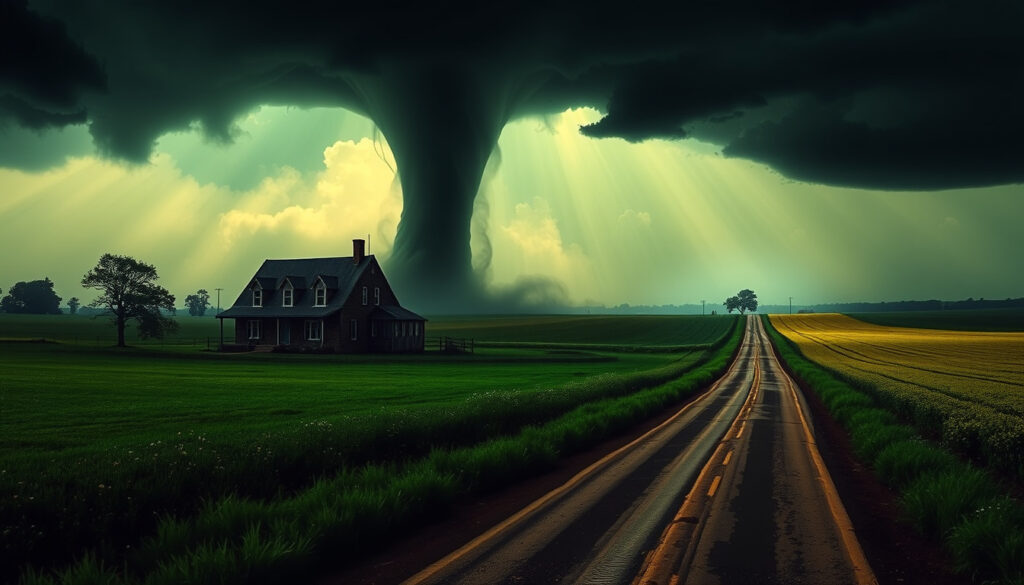
- Dorothy Gale is swept away to Oz by a tornado (Audacy).
- She meets the Scarecrow, Tin Man, and Cowardly Lion on the yellow brick road (BBC Culture).
- They travel to the Emerald City to meet the Wizard, who sends them to destroy the Wicked Witch of the West (BBC Culture).
- Dorothy returns home using the ruby slippers (in the film) or silver shoes (in the book) (BBC Culture).
The 1939 film adaptation, directed by Victor Fleming and starring Judy Garland, turned Oz into a dream narrative—a major departure from Baum’s original novel, which presented Oz as a real place (The Telegraph (UK culture desk)).
The film’s dream framing sanitized the story’s darker edges, making it more palatable for family audiences—but it also erased the political and economic subtext that runs through Baum’s book.
The implication: The shift from a real magical land to a dream sequence fundamentally changed how audiences interpret the journey and its lessons.
What is the real story behind The Wizard of Oz?
What is the dark side of the original Wizard of Oz?
Baum’s 1900 novel The Wonderful Wizard of Oz contains scenes and themes the 1939 film left out. The Tin Woodman was once a human whose limbs were gradually replaced by a tinsmith after a cursed axe kept chopping them off. The Wicked Witch of the West was described as a one-eyed, old hag—not green-skinned as later popularized. The Flying Monkeys were a enslaved species forced to serve the Witch. These elements gave the original story a much grimmer tone (The Telegraph (UK culture desk)).
What is the dark backstory of The Wizard of Oz?
Beyond the plot, Baum’s own life supplied dark inspiration. He grew up near Peekskill, New York, where a yellow brick road–like path led to a local landmark, and his time as a salesman informed the commercial motifs of the Tin Woodman and the Wizard himself (The Telegraph (UK culture desk)). The tornado that carries Dorothy to Oz may have been inspired by a real 1879 tornado outbreak near Irving, Kansas, where a young woman named Dorothy Gale was reportedly found without her shoes after the storm (Audacy (weather history podcast)).
The same story that delights children with talking scarecrows also contains mutilation, slavery, and a manipulative Wizard—a duality that modern retellings like Wicked have turned into the central tension.
The pattern: These darker elements are often the most compelling for adult readers, revealing a story that refuses to be simply a children’s tale.
What is the deeper meaning behind The Wizard of Oz?
What did the lion, Scarecrow, and tin man represent?
Since the 1960s, scholars have read Oz as a populist allegory of the Gilded Age. The Scarecrow represents farmers, the Tin Man represents industrial workers, and the Cowardly Lion is a stand-in for William Jennings Bryan, the populist political leader. The Yellow Brick Road symbolizes the gold standard, and the ruby slippers (silver in the book) represent the free-silver movement that Bryan championed. The Wizard himself is the political establishment—a fraud who rules through illusion (HistoryNet (American history publication)).
What is the populist allegory of The Wizard of Oz?
This interpretation remains influential, though not universally accepted. Baum never explicitly confirmed an allegorical intent, and some historians argue the parallels are coincidental. Yet the reading persists because it maps so neatly onto the economic anxieties of the 1890s—the very period in which Baum wrote (The Telegraph (UK culture desk)).
What this means: Whether Baum intended it or not, the story has become a canvas for political interpretation, and each generation finds its own meaning in the journey down the yellow brick road.
Why can’t Wicked use Dorothy?
Why is Dorothy’s face hidden?
Wicked is a prequel that tells the story from the perspective of Elphaba, the Wicked Witch of the West. Dorothy appears only briefly in the musical (and its upcoming film adaptation) because the narrative stays focused on Elphaba’s journey. Director Jon M. Chu has explained that Dorothy’s face is deliberately hidden—shown from behind or in shadows—to maintain the story’s point of view and avoid distracting from the central character (BBC Culture (arts and culture desk)).
For Good director Jon M. Chu explains why Dorothy’s face will stay hidden
In an interview, Chu said: “It’s about keeping the story focused on Elphaba. Dorothy is a symbol in this world, not a person. Showing her face would break the spell.” This creative choice reinforces the theme that every story has multiple sides—and the one we know best (Dorothy’s) is not the only one.
The hidden-face technique is a storytelling device that forces audiences to question who the “real” hero is—a question Baum’s original novel also raised by making the Wizard a fraud.
The catch: By hiding Dorothy, the filmmakers challenge the audience to reconsider their assumptions about the narrative.
What is the significance of the ruby slippers?
Why were the shoes changed from silver to ruby?
In Baum’s book, Dorothy’s shoes were silver. The 1939 film changed them to ruby red to take advantage of Technicolor’s vivid palette—ruby popped against the yellow brick road. The decision was purely visual, but it created one of cinema’s most iconic props (BBC Culture (arts and culture desk)).
What happened to the original ruby slippers?
Several pairs of the original film slippers exist. One of them sold at auction in 2011 for $2.6 million, a world record for a piece of movie memorabilia. The slippers are housed at the Smithsonian Institution and other private collections, and a pair was stolen from the Judy Garland Museum in 2005—a heist that remains unsolved.
The implication: The ruby slippers have become a cultural artifact far more valuable than the silver shoes ever were, proving that color matters in the Land of Oz.
Timeline
- 1900 — Publication of The Wonderful Wizard of Oz (BBC Culture)
- 1939 — Release of The Wizard of Oz film (BBC Culture)
- 1995 — Gregory Maguire publishes Wicked: The Life and Times of the Wicked Witch of the West (BBC Culture)
- 2003 — Broadway premiere of Wicked musical (BBC Culture)
- 2024 — Release of Wicked film adaptation (Part 1) (BBC Culture)
Confirmed facts vs. What’s unclear
Confirmed facts
- The Tin Woodman was originally a human who had his limbs replaced (The Telegraph)
- The Wicked Witch of the West was not green in the original book (The Telegraph)
- The silver shoes were changed to ruby for the 1939 film (BBC Culture)
- The Flying Monkeys were enslaved by the Wicked Witch (The Telegraph)
What’s unclear
- Whether Baum intended a deliberate populist allegory (HistoryNet)
- The exact origin of the name “Oz”
- Whether the 1879 Kansas tornado story is genuinely connected to Baum (Audacy)
- Whether the name “Oz” came from the drawer labeled O-Z (unconfirmed anecdote)
Voices from Oz
“I want the story to be a modernized fairy tale, in which the wonderment and joy are retained and the heart-aches and nightmares are left out.”
— L. Frank Baum, in the introduction to The Wonderful Wizard of Oz (The Telegraph)
“I wanted to explore the nature of evil and good—how a person gets labeled as wicked and what that does to her.”
— Gregory Maguire, author of Wicked (BBC Culture)
“It’s about keeping the story focused on Elphaba. Dorothy is a symbol in this world, not a person. Showing her face would break the spell.”
— Jon M. Chu, director of the Wicked film adaptation (BBC Culture)
For readers who grew up on the movie, Oz is a place of wonder and wish-fulfillment. But the real story—and the deeper meaning—reveals a world of political satire, social injustice, and a Wizard who is only as powerful as the curtain he hides behind. Wicked has made that tension explicit, and with the upcoming film adaptation, a new generation will confront the question Baum himself posed: who decides who is good and who is wicked?
youtube.com, youtube.com, youtube.com, youtube.com, youtube.com, youtube.com, movieweb.com, nerdveda.com
Frequently asked questions
Who wrote the original Wizard of Oz book?
L. Frank Baum wrote The Wonderful Wizard of Oz, published in 1900 (BBC Culture).
What is the difference between the book and the movie?
The book is darker, with more violent scenes, and the shoes are silver instead of ruby. The film also turns Oz into a dream, while the book presents it as a real place (The Telegraph).
Why did the film change the shoes to ruby?
To take advantage of Technicolor—ruby red popped against the yellow brick road (BBC Culture).
Is the Wicked Witch of the West real?
She is a fictional character, but in Wicked she is reimagined as Elphaba, a complex protagonist with a tragic backstory.
What is the meaning of the phrase “There’s no place like home”?
It’s the film’s moral—that the love and security of home are more valuable than any magical adventure. In the book, Dorothy simply returns home through the power of the silver shoes.
How many books in the Oz series?
Baum wrote 14 Oz books. After his death, other authors continued the series, adding more than 40 official titles.
What is the connection between Wicked and The Wizard of Oz?
Wicked is a prequel that tells the story from the Wicked Witch’s perspective, reimagining her as Elphaba, a misunderstood girl who is judged by her green skin (BBC Culture).
Why is the Wicked Witch green in the movie but not in the book?
The film invented the green skin to make the Witch more visually striking. In Baum’s book, she is described as a one-eyed, old woman with no mention of green skin (The Telegraph).
More related posts
 RedClick Young Driver Insurance: Cheapest Rates & Tips
 Technological University of the Shannon: Guide & Ranking
 GAA Results Today Football: Live Scores, TV Schedule & Updates
 Electric Hot Water Bottle: How Long Does It Stay Hot
 Cardinal Robert Francis Prevost: Pope Leo XIV Biography
 6 Week Plan Ozempic Weight Loss Results: Expectations
 Dom Jose Beach Hotel Quarteira: Reviews, Location & Amenities
 Hotels in Kilkenny City: The Best Places to Stay in 2025