How Many Calories in a Spice Bag? (Full Guide)
Anyone who’s ever pulled up a stool at an Irish Chinese takeaway and ordered a spice bag knows the feeling: crispy chicken, salty chips, that sweet-and-spicy dust — but how many calories are actually in the bag? The answer swings from 532 calories for a Kerrigans 400g spice bag to over 1,070 for a Wetherspoons chicken spice bag with chips.
Average calories in a standard spice bag: 800–1,070 kcal ·
Calories in a 400g Kerrigans spice bag: 532 kcal ·
Protein in a typical spice bag: 28–53 g ·
Fat in a typical spice bag: 41 g (Wetherspoons) ·
Carbohydrates in a typical spice bag: 130 g (Wetherspoons) ·
Lowest calorie Chinese takeaway item: Steamed dumplings or mixed vegetables (~200–300 kcal)
Quick snapshot
- Standard spice bag contains 800–1,070 calories (SnapCalorie crowdsourced nutrition database)
- Kerrigans 400g spice bag: 532 calories (Kerrigans Irish takeaway brand)
- Exact calorie count varies widely by recipe and portion size — no single authoritative source for all spice bags (Nutracheck UK nutrition tracking site)
- Many homemade recipes report numbers between 171 and 935 calories, making comparisons unreliable (Nutracheck UK nutrition tracking site)
- Wetherspoons chicken spice bag with chips: 1,070 calories — but this reflects one chain’s portion, not a universal baseline (Nutracheck UK nutrition tracking site)
- 2025–2026: surge in published recipes and social media posts featuring lower-calorie versions (482–595 kcal)
- Cooking with Cocktail Rings published a 935 kcal recipe in February 2026; Andy Cooks followed in April 2026
- Growing demand for “fakeaway” versions that cut calories by air-frying and using grilled chicken
- Major takeaways may start offering nutrition info as Irish consumers become more health-conscious
| Attribute | Value |
|---|---|
| Average calorie count | 800–1,070 kcal per serving |
| Lowest recorded (commercial) | 532 kcal (Kerrigans 400g) |
| Highest recorded (commercial) | 1,070 kcal (Wetherspoons) |
| Protein content | 28–53 g |
| Fat content | 5.7–41 g |
| Carbohydrate content | 15–130 g |
The pattern across all sources: deep-fried components drive the calorie count, and the gap between lowest and highest recorded is nearly 500 kcal.
How many calories does a spice bag have?
The short answer: a typical spice bag from a Chinese takeaway in Ireland delivers between 800 and 1,070 calories. But the number shifts dramatically depending on portion size, cooking method, and what’s inside. A commercial 400g Kerrigans spice bag — one of the few products with a printed nutrition label — comes in at 532 calories, according to the manufacturer’s data (Kerrigans Irish takeaway brand). On the other end, a Wetherspoons chicken spice bag with chips hits 1,070 calories, per Nutracheck UK nutrition tracking site.
Calorie range for a standard spice bag
- Cooking with Cocktail Rings (recipe site): 935 kcal per serving (Cooking with Cocktail Rings food blog)
- Seasons and Suppers (recipe site): 569 kcal per serving (Seasons and Suppers Canadian food blog)
- SnapCalorie (crowdsourced database): 800 kcal per 300 g serving (SnapCalorie nutrition tracker)
- Instagram “fakeaway” versions: 543–595 kcal with high protein claims (Instagram social media creator)
The implication: even among published recipes, the range spans nearly 400 kcal depending on how much oil and batter each cook uses.
Calories in a 400g Kerrigans spice bag
Kerrigans is one of the few brands to put nutrition data on the box: 532 calories, 28 g protein, 5.7 g fat, and 15 g carbohydrates per 400 g serving. That’s notably lower than the typical takeaway version, likely because of portion control and a higher chicken-to-chip ratio.
Calories in a Wetherspoons chicken spice bag with chips
Wetherspoons’ menu lists a chicken spice bag with chips at 1,070 calories — that’s 41 g fat and 130 g carbohydrates (Nutracheck UK nutrition tracking site). This falls at the top end of the range, reflecting larger portions and deep-fried chips.
The pattern: the calories swing by as much as 500 kcal depending on whether the cook uses fried chicken or grilled, and how many chips they pile in. If you’re counting, ask for a half-portion or swap the chips for a side of steamed veg.
What is an Irish Chinese spice bag?
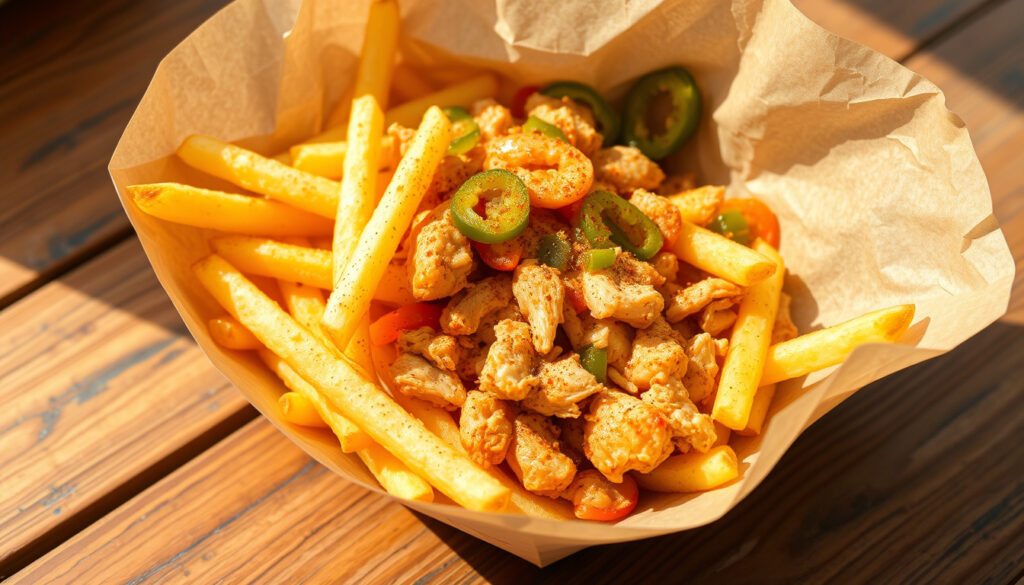
An Irish Chinese spice bag is a takeaway dish that combines fried chicken pieces, chips (thick-cut fries), stir-fried onions and peppers, all tossed in a dry spice mix heavy on Chinese five spice, garlic powder, and chilli. It’s not a traditional Chinese dish — it was born in Irish Chinese takeaways as a satisfying, snackable mix.
Origins of the spice bag
The dish likely emerged in the 2000s, when Irish Chinese takeaways started mixing leftover chicken and chips with a spicy salt-and-pepper seasoning. It quickly became a staple, especially after pub hours. Seasons and Suppers Canadian food blog notes that the seasoning blend is “heavy on the five spice.” Andy Cooks YouTube chef and recipe publisher describes the dry mix as including two types of chilli powder, Chinese five spice, garlic powder, MSG, and white pepper.
Typical ingredients: chicken, chips, peppers, onions, spice mix
- Fried chicken strips or popcorn chicken (main protein)
- Thick-cut chips (deep-fried potatoes)
- Sliced bell peppers and onions (stir-fried)
- A dry seasoning blend (chilli, five spice, garlic, MSG, sugar)
- Sometimes served with curry sauce on the side
Cooking with Cocktail Rings food blog describes the dish as popular for its “combination of crispy chicken, fries, onions, peppers, and seasoning.” The calorie load comes mostly from the deep-fried components.
The catch: it’s essentially a deconstructed Chinese takeaway meal in one bag. Great for sharing, but the oil and batter add up fast.
Are Chinese takeaways high in calories?
Many Chinese takeaway dishes are calorie-dense because of deep-frying, sugary sauces, and large portion sizes. A single portion can easily exceed 1,000 calories. For context, a typical sweet and sour chicken with fried rice can hit 1,200–1,500 kcal (Nutracheck UK nutrition tracking site).
Calorie comparison of common Chinese takeaway dishes
Six popular dishes, one pattern: frying and sauce drive the numbers up.
| Dish | Approximate calories | Main calorie source |
|---|---|---|
| Spice bag (standard) | 800–1,070 | Fried chicken, chips, oil |
| Sweet and sour chicken (with rice) | 1,200–1,500 | Battered chicken, sweet sauce, rice |
| Chicken chow mein | 600–900 | Noodles, oil, sauce |
| Steamed dumplings (6 pieces) | 200–300 | Filling (pork/veg), wrapper |
| Spring rolls (2 pieces) | 180–250 | Wrapper, deep-frying |
| Mixed vegetables (steamed) | 150–200 | Vegetables, minimal oil |
The implication: if you’re watching calories, Chinese takeaway can still fit — you just need to choose steamed or vegetable-based dishes and skip the fried extras.
Factors that increase calorie content: frying, sauces, portion size
- Frying: absorbs oil, adding 100–200 calories per serving beyond the base ingredients.
- Sauces: sweet and sour, curry, or black bean sauces often contain sugar and starch, adding 50–100 extra calories per tablespoon.
- Portion size: many takeaways serve 400–600 g of food, easily pushing past 1,000 calories. A standard spice bag portion can weigh 300–500 g (SnapCalorie crowdsourced nutrition database).
What this means: choosing steamed or stir-fried dishes over battered ones can cut 300–500 calories from a single takeaway order.
What is the lowest calorie thing from Chinese takeaway?
If you’re at a Chinese takeaway and want to keep the meal under 400 calories, look for steamed dishes, vegetable options, and clear soups. These avoid the oil and batter that push calorie counts high.
Steamed dishes
- Steamed dumplings (pork or vegetable): ~200–300 calories for 6 pieces (@CalorieKing)
- Steamed rice plain: ~200 calories per cup
- Steamed fish with ginger: ~250–350 calories
Vegetable-based options
- Mixed vegetables (steamed): ~150–200 calories
- Vegetable soup (clear broth): ~80–120 calories
- Bok choy with garlic: ~100–150 calories
Portion control tips
- Order a small or half-portion if available
- Share a main dish with a friend
- Skip the fried appetisers and go straight to steamed or stir-fried mains
- Ask for sauce on the side so you control the amount
BBC Good Food UK recipe and nutrition resource lists “steamed dim sum” and “clear soup” among the healthiest takeaway options.
Why this matters: swapping a spice bag (900 kcal) for steamed mixed vegetables (200 kcal) cuts over 700 calories — a huge difference if you’re eating out once a week.
Are seasonings actually 0 calories?
Most individual spices are very low in calories — typically under 5 kcal per teaspoon. But pre-mixed spice blends can contain added sugar, oil, or maltodextrin, which add measurable calories. The spice bag seasoning mix sold by Condimaniac specialty seasoning brand lists sea salt, sugar, MSG, chilli flakes, and garlic powder — the sugar contributes roughly 10–15 calories per teaspoon (about 4 g of sugar per 5 g serving).
Calorie content of common spices and seasonings
- Garlic powder: ~10 kcal per teaspoon
- Chilli flakes: ~6 kcal per teaspoon
- Chinese five spice: ~5 kcal per teaspoon
- MSG: ~0 kcal (no digestible energy)
- Sugar: ~16 kcal per teaspoon
How spice blends can add hidden calories
While the seasoning in a spice bag probably adds only 20–40 calories total, the bigger hidden source is the oil that the seasoning clings to. A dry spice mix applied after frying adds flavour, not fat — but the fried chicken and chips already carry most of the calories. Andy Cooks YouTube chef emphasises that the seasoning is a dry mix, which keeps extra calories minimal.
The trade-off: don’t worry about the seasoning itself — worry about what’s underneath it. The 41 g of fat in a Wetherspoons spice bag come from the fryer, not the spice dust.
The seasoning on a spice bag adds maybe 30 calories. The deep-fried chicken and chips underneath add 900. If you want to cut calories, swap the cooking method, not the flavour.
If you’re scanning a takeaway menu, assume any dish described as “crispy,” “battered,” or “deep-fried” packs 100–200 extra calories from oil alone compared to its grilled equivalent. If you’re looking for more information on spice bags, check out this upper stomach pain relief.
What is the healthiest takeaway for weight loss?
When you’re trying to lose weight, takeaway choices matter. Grilled or steamed options from any cuisine are generally healthier than fried or breaded ones. BBC Good Food UK recipe and nutrition site ranks sushi, grilled chicken salads, and vegetable-based stir-fries among the best takeaway choices for weight loss.
Takeaway cuisines ranked by calorie density
- Japanese: Sushi rolls (300–400 kcal per 6 pieces), miso soup (40–80 kcal)
- Thai: Tom yum soup (150 kcal), green papaya salad (200 kcal)
- Chinese: Steamed dumplings (200–300 kcal), mixed vegetables (150–200 kcal)
- Indian: Tandoori chicken (300 kcal), dal (200 kcal)
- Italian: Minestrone (150 kcal), grilled fish with vegetables (350 kcal)
Tips for choosing lower-calorie takeaway meals
- Opt for grilled, steamed, or stir-fried proteins over battered or deep-fried ones
- Ask for sauces and dressings on the side
- Start with a clear soup or salad to reduce overall intake
- Share a main course or take half home for the next day
- Check menu nutrition info online when available
For someone trying to lose weight, the healthiest takeaway is one that keeps the calorie count under 500 and maximises vegetables and lean protein. A spice bag can fit — if you make it at home or order a small grilled chicken version.
How many calories in a homemade spice bag?
Homemade spice bags can be significantly lower in calories because you control the oil, portion size, and cooking method. Recipes published online show a wide range:
- Seasons and Suppers recipe: 569 kcal per serving (Seasons and Suppers Canadian food blog)
- Andy Cooks recipe: estimated ~600–700 kcal per serving (using grilled chicken and less oil) (Andy Cooks YouTube chef)
- Instagram “fakeaway” claims: 543–595 kcal with 43 g protein (Instagram social media creator)
- TikTok low-cal version: 482 kcal per portion (TikTok recipe creator)
Calorie comparison: homemade vs takeaway
Six numbers, one pattern: homemade versions average 30–50% fewer calories than takeaway equivalents.
| Source | Calories | Method |
|---|---|---|
| Takeaway (average) | 800–1,070 | Deep-fried chicken and chips |
| Wetherspoons | 1,070 | Deep-fried chicken, chips |
| Kerrigans 400g | 532 | Pre-cooked, oven-baked |
| Seasons and Suppers (homemade) | 569 | Pan-fried chicken, oven chips |
| Andy Cooks (homemade) | ~650 | Grilled chicken, air-fried chips |
| TikTok “low-cal” | 482 | Air-fried chicken, veg, light spice |
The pattern: switching from deep-fried to air-fried or grilled cuts 200–500 kcal while keeping the spice bag flavour intact.
Tips for reducing calories in a homemade spice bag
- Use air-fried or oven-baked chips instead of deep-fried
- Grill or bake the chicken instead of battering and frying
- Load up on stir-fried peppers and onions for volume without many calories
- Use a light spray of oil instead of pour-and-fry
- Measure the seasoning — it’s calorie-light, but heavy hand with sugar adds up
Serious Eats culinary science resource offers a base recipe that can be adapted for lower calorie cooking. For more Irish-inspired homemade meal ideas, check out Wing’s World Cuisine Reviews and Donal Skehan Banana Bread: Recipes, Tips, and Health Insights.
For anyone who loves the spice bag but wants to keep the calorie count under 600, a homemade version is the way to go. The effort pays off in control — and the flavour stays.
For the weight-conscious Irish takeaway lover, the choice is clear: a homemade spice bag can cut calories by nearly half while keeping the crunch. The trade-off is 20 minutes of cooking versus a 3-minute phone order.
What we know and what we don’t
Confirmed facts
- A typical spice bag contains 800–1,070 calories.
- Kerrigans 400g spice bag has 532 calories.
- Wetherspoons chicken spice bag with chips has 1,070 calories.
- Homemade versions can be 400–600 calories with air-frying.
- Steamed Chinese dishes often stay under 300 calories.
What’s unclear
- Exact calorie count varies by recipe and portion — no universal number.
- Most restaurant spice bags don’t publish nutrition info.
- Social media claims (482–595 kcal) are not lab-verified.
- Impact of MSG or sugar in seasoning on total calorie is minimal but not zero.
What people are saying
You’re looking at around 800–1,000 calories at least I’d say.
— Reddit user on r/ireland, estimating spice bag calories (Reddit community discussion forum)
532 calories per 400g serving — a surprisingly low option compared to most takeaways.
— Kerrigans nutrition label (Irish takeaway brand)
Wetherspoons chicken spice bag with chips contains 1,070 calories, 41 g fat, 130 g carbs.
— Nutracheck entry (UK nutrition tracking site)
For anyone who regularly orders a spice bag, the gap between 532 and 1,070 calories is the difference between a reasonable meal and half a day’s intake. The takeaway industry in Ireland hasn’t standardised portions or nutrition labelling, so the burden falls on the consumer. If you want to keep that Friday-night ritual without derailing your week, ask for a small spice bag, or better yet, make it at home with air-fried chips and grilled chicken. The choice isn’t between flavour and health — it’s about knowing what’s actually in the bag.
Frequently asked questions
How many calories are in a spice bag with curry sauce?
A standard spice bag with a side of curry sauce adds roughly 100–150 extra calories (from oil and sugar in the sauce), bringing the total to 900–1,220 kcal.
Is a spice bag high in protein?
Yes, a typical spice bag provides 28–53 g of protein, mostly from the chicken. That’s roughly half the daily protein intake for an average adult.
Can I eat a spice bag on a calorie deficit?
Yes, if you plan for it. A small spice bag (400–500 kcal) can fit into a 1,500–1,800 kcal deficit day. Avoid the curry sauce and stick to a smaller portion.
How can I make a low-calorie spice bag at home?
Use air-fried chips, grilled chicken, plenty of vegetables, and a dry spice mix. This can cut calories to under 600 per serving while preserving the flavour (Serious Eats culinary science resource).
What is the 4 4 9 rule for calories?
The 4-4-9 rule says that carbohydrates and protein each provide 4 calories per gram, while fat provides 9 calories per gram. It’s used to estimate the calorie content of foods based on macros.
More related posts
 Marks & Spencer Clothing: Discounts, Online Orders & Tips
 New York Yankees Standings 2026: Record & Division Position
 Discount Codes HubSpot: Valid Promos & Coupons 2026
 Best Pens for Journaling: Smudge-Free Picks for Lefties
 11 Best Things to Do in Santorini (2026 Itinerary Guide)
 Princess Stéphanie of Monaco: Life, Career & Family
 Mimosa Bar de Tapas – Build Your Own Brunch Spread
 Cast of Heated Rivalry – Actors Characters and Series Facts