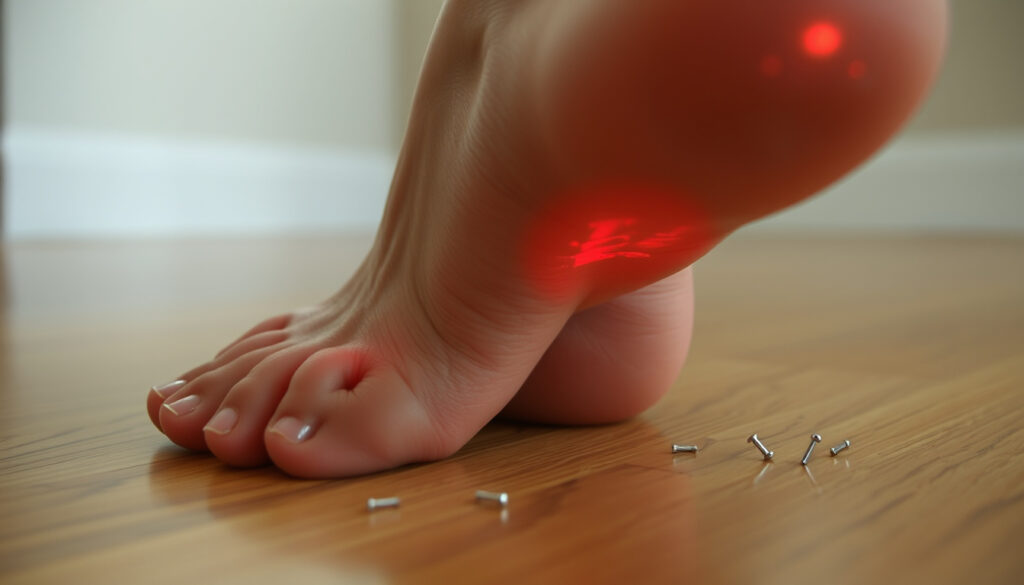
Pins and Needles in Feet: Causes, Warning Signs, Relief
That familiar tingle in your feet after sitting cross-legged too long is usually nothing to worry about. But when the pins and needles keep coming back without an obvious reason, it’s natural to wonder if something deeper is going on.
Adults in the U.S. affected by peripheral neuropathy: ~20 million ·
People with diabetes who develop diabetic neuropathy: ~50% ·
Temporary pins and needles caused by nerve pressure: Most common harmless cause ·
Adults over 60 reporting foot tingling: ~20% ·
Vitamin B12 deficiency as a reversible cause: Treatable in many cases
Quick snapshot
- Exact mechanism of idiopathic peripheral neuropathy remains unknown
- Why some people develop neuropathy while others with the same condition do not
- Harmless pins and needles: seconds to minutes after pressure removed
- Persistent tingling for weeks or returning often: see a doctor
- If temporary, change position and check footwear
- If recurring, get a medical evaluation for underlying causes
Five key facts about foot tingling, one pattern: most cases are benign, but persistence points to a systemic issue.
| Label | Value |
|---|---|
| Most common cause | Diabetic neuropathy |
| U.S. adults with chronic foot tingling | ~20 million (peripheral neuropathy) |
| Reversible cause | Vitamin B12 deficiency |
| Red flag symptom | Sudden numbness or weakness on one side |
| Typical duration of harmless pins and needles | Seconds to minutes after pressure is removed |
Should I be worried about pins and needles in my feet?
Is tingling in the feet serious?
- Temporary pins and needles from pressure — like sitting on your foot or wearing tight shoes — is usually harmless and resolves within seconds to minutes (NHS (UK health authority)).
- Persistent or unexplained tingling that keeps coming back warrants medical evaluation (nidirect (Northern Ireland government health advice)).
- Accompanying symptoms like weakness, numbness, or loss of bladder control are red flags (Summit Health (specialist clinic)).
- Red flag: sudden onset after injury or with chest pain.
When to see a doctor
- Mayo Clinic advises seeking medical care right away if tingling, weakness, or pain appears in the hands or feet (Mayo Clinic (leading medical institution)).
- Severe pain, bowel or bladder changes, spreading tingling, weakness, or loss of coordination are emergency warning signs (Summit Health).
Most people with harmless foot tingling never develop a serious condition. But the few who do often regret waiting. The pattern: if it’s recurrent and you can’t explain it, let a doctor decide.
What is the most common cause of tingling feet?
Diabetes and diabetic neuropathy
- Diabetes is the most common cause of chronic foot tingling. In the UK, diabetes is the leading cause of peripheral neuropathy (NHS (UK health authority)).
- About half of all people with diabetes have some form of nerve damage (CDC (U.S. public health agency)).
- Peripheral neuropathy can cause burning, stabbing, or shooting pain and loss of balance or co-ordination (NHS).
Other common causes: vitamin deficiencies, alcohol, hypothyroidism
- Vitamin B12 deficiency is a recognized cause of persistent pins and needles (nidirect).
- Excessive alcohol use can lead to alcoholic neuropathy.
- Hypothyroidism, multiple sclerosis, and Raynaud’s disease are also associated with foot tingling (Better Health Channel (Victorian government health service)).
Can heart problems cause pins and needles in feet?
What are signs of heart failure in your feet?
- Heart failure can cause foot swelling (edema), not typically pins and needles.
- Peripheral artery disease (blocked arteries) can cause tingling or numbness in the feet (Summit Health).
- Signs of heart failure include swelling, sudden weight gain, fatigue, and shortness of breath.
What are the four signs your heart is quietly failing?
- The classic signs: shortness of breath, persistent coughing or wheezing, swelling in feet/ankles, and fatigue.
- Tingling in feet alone is not a classic heart failure symptom, but poor circulation from peripheral artery disease can cause it.
If you have foot tingling plus swelling, breathlessness, or fatigue, don’t assume it’s just a nerve issue. Those symptoms together point toward the heart, and they need urgent evaluation.
What diseases start with tingling in hands and feet?
Multiple sclerosis
- Multiple sclerosis often begins with tingling in one limb (nidirect).
- Other early signs include weakness, vision problems, and balance issues.
Peripheral neuropathy from other conditions
- Diabetes, hypothyroidism, and rheumatoid arthritis can start with foot tingling.
- Guillain-Barré syndrome starts with weakness and tingling in the feet, then ascends.
- Vitamin deficiencies and infections can also cause symmetrical tingling.
Autoimmune diseases
- Lupus, Sjögren’s syndrome, and celiac disease can cause peripheral neuropathy.
- Raynaud’s disease affects blood supply to toes and can produce pins and needles (nidirect).
What is a red flag for pins and needles?
Signs that require urgent medical attention
- Sudden loss of bladder or bowel control, weakness, or paralysis.
- Tingling after head or spine injury is a red flag (nidirect).
- Associated chest pain or difficulty breathing may indicate a heart attack.
- Progressive or symmetrical tingling may indicate a systemic disease.
Difference between temporary and chronic pins and needles
- Temporary: caused by pressure on a nerve, resolves quickly when pressure is removed (NHS).
- Chronic: recurs or persists for weeks, often signals an underlying condition.
- NHS guidance says constantly recurring pins and needles may signal a more serious underlying health condition (nidirect).
The single most important red flag is new weakness or numbness on one side of the body — that’s stroke territory. If you’re also having chest pain or trouble breathing, call emergency services.
What to do about pins and needles in feet: step-by-step relief
- Change position. If you’ve been sitting or lying on your foot, shift weight and wiggle your toes. Most cases resolve within minutes (NHS).
- Check your footwear. Tight shoes or socks can compress nerves. Remove them and flex your feet (nidirect).
- Move your ankles and toes. Rotate each ankle in circles, then point and flex your toes. This encourages blood flow and nerve recovery.
- Check for other causes. If the tingling is recurrent, review your diet (vitamin B12), alcohol intake, and any medications. A blood test can check for diabetes, thyroid issues, and vitamin deficiencies.
- See a doctor if it persists. Recurring or long-lasting pins and needles should be assessed by a GP (NHS).
For related reading on foot health, see our guide on How to Identify a Wart: Visual Guide and Signs. And for neurological symptoms, Symptoms of Parkinson’s: 5 Early Signs, Finger Test & Home Check may be helpful.
Confirmed facts vs. what remains unclear
Confirmed facts
- Diabetes is the leading cause of chronic peripheral neuropathy (NHS).
- Vitamin B12 deficiency can cause reversible tingling (nidirect).
- Temporary pins and needles from nerve compression is harmless (NHS).
- Half of all people with diabetes develop nerve damage (CDC).
What’s unclear
- Exact mechanism of idiopathic peripheral neuropathy remains unknown.
- Why some people develop neuropathy while others with the same condition do not.
Expert perspectives on foot tingling
Pins and needles typically occur when blood supply to nerves is reduced, often from pressure. Most cases resolve quickly.
— NHS (UK health authority)
About half of all people with diabetes have some form of nerve damage.
— CDC (U.S. public health agency)
Peripheral neuropathy can be a sign of an underlying medical condition that requires treatment.
— National Institute of Neurological Disorders and Stroke (U.S. federal research institute)
Summary
For most people, pins and needles in feet are a passing nuisance. But when the tingling becomes a regular visitor, it’s usually your body asking for a closer look. The person experiencing recurrent foot tingling should get a blood test and a basic neurological exam, or risk missing a treatable condition like vitamin B12 deficiency or early diabetic neuropathy.
newpromiseneuropathy.com, patient.info, thefootinstitute.com, niddk.nih.gov, neurologyinstituteofhuntsville.com, youtube.com
Similar sensations in the hands can also be concerning, as discussed in pins and needles in the hands.
Frequently asked questions
Can stress cause pins and needles in feet?
Stress and anxiety can lead to hyperventilation, which can cause temporary pins and needles in the feet and hands (nidirect). However, chronic stress alone is rarely the sole cause.
How long does pins and needles normally last?
Harmless pins and needles from pressure usually resolve within seconds to minutes after removing the pressure (NHS). If it lasts longer or recurs, see a doctor.
Is pins and needles in one foot more concerning than both?
Yes, tingling in one foot may indicate a local nerve compression (like sciatica or a trapped nerve) rather than a systemic condition. Both feet affected points more toward a whole-body issue like diabetes or vitamin deficiency.
What home remedies can relieve tingling feet?
Wiggle your toes, rotate your ankles, and walk around. Warm foot baths can improve circulation. If the tingling persists, a doctor may recommend vitamin B12 supplements if deficient.
Does dehydration cause pins and needles?
Dehydration can lead to electrolyte imbalances that may cause tingling, but it’s not a common primary cause. Severe dehydration combined with heat can cause paresthesia.
Can pins and needles in feet be a sign of a stroke?
Yes, a stroke can cause sudden numbness or tingling on one side of the body, including the foot. If accompanied by weakness, facial drooping, or speech problems, call emergency services immediately (nidirect).
What medications can cause foot tingling?
Chemotherapy drugs are a known cause of persistent pins and needles (nidirect). Other medications like some antibiotics, antiretrovirals, and anticonvulsants can also cause peripheral neuropathy.
More related posts
 Pantone Colour of the Year 2026 – Cloud Dancer Announced
 How to Fix a Leaking Shower Head: Step-by-Step Guide
 Fota Wildlife Park Photos – Best Animals and Capture Tips
 6 Week Plan Ozempic Weight Loss Results: Expectations
 What Is Neural TTS? How It Works, Models, and Top Platforms
 Best Universities in the World 2026: QS, THE, US News
 Kia EV9 for Sale in Ireland – Prices & Worth Buying